Automation systems power the modern world. From manufacturing plants and smart factories to logistics networks and energy systems, automation technologies enable machines to operate efficiently, safely, and with minimal human intervention.
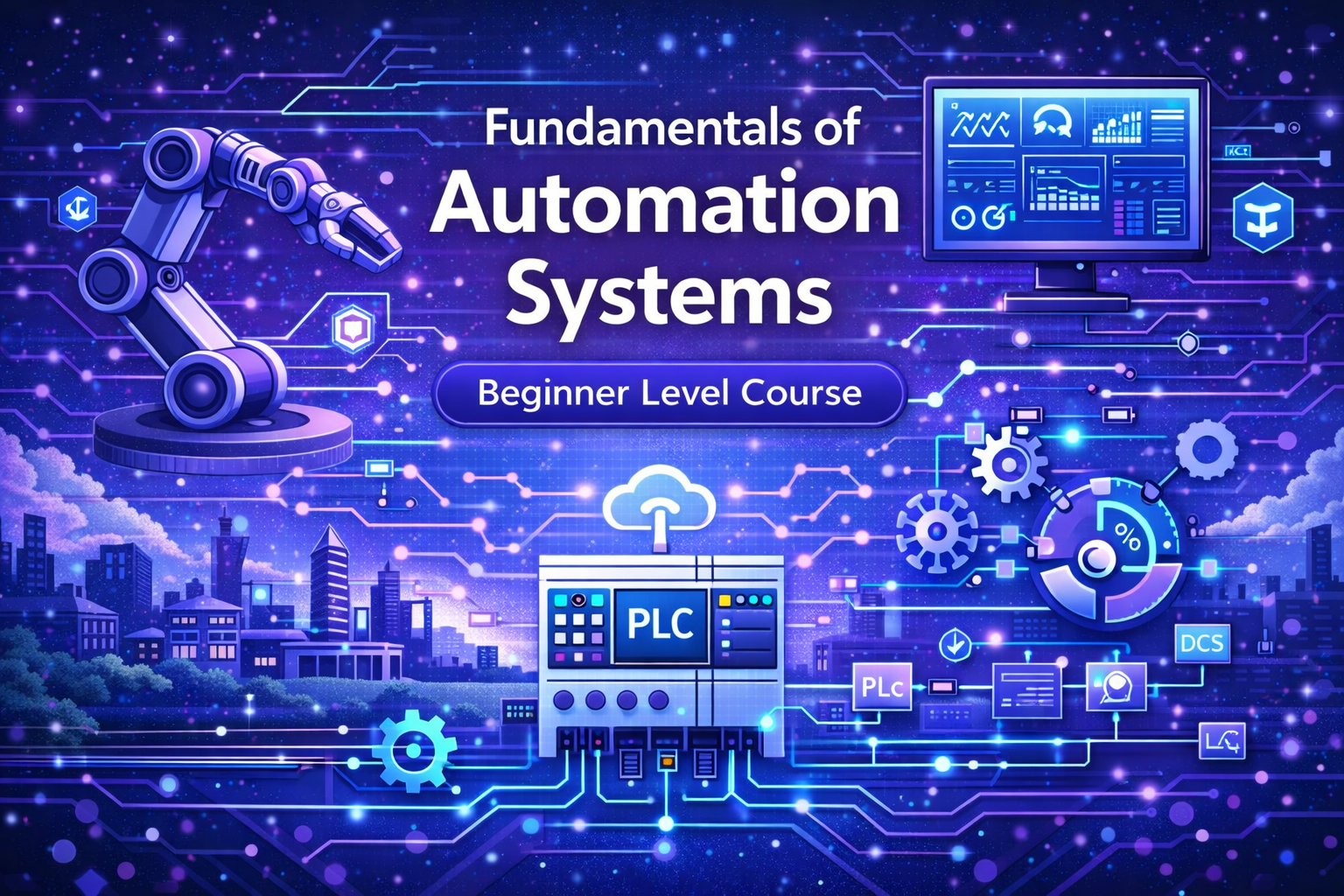
This course introduces the core principles behind automation systems, helping learners understand how machines, sensors, controllers, and software work together to automate industrial and business processes.
You will explore the technologies that drive Industry 4.0, including intelligent control systems, industrial automation platforms, and smart manufacturing environments.
In this course you will learn:
• The fundamental concepts of automation systems and how they work
• The key components of automation including sensors, actuators, controllers, and control systems
• How industrial processes are monitored and controlled using automation technologies
• The difference between open-loop and closed-loop control systems
• How machines communicate and coordinate tasks in automated environments
• The role of PLC, SCADA, and distributed control systems in industrial automation
Why automation systems matter
Automation is the foundation of modern industries such as:
• Manufacturing and smart factories
• Energy and power systems
• Logistics and supply chains
• Infrastructure and transportation
• Healthcare and industrial equipment
By automating repetitive and complex tasks, organizations can improve productivity, safety, quality, and operational efficiency.
By the end of this course
You will have a strong understanding of:
• Industrial automation technologies
• Automation system components and workflows
• Control systems used in automated environments
• The role of automation in smart factories and Industry 4.0
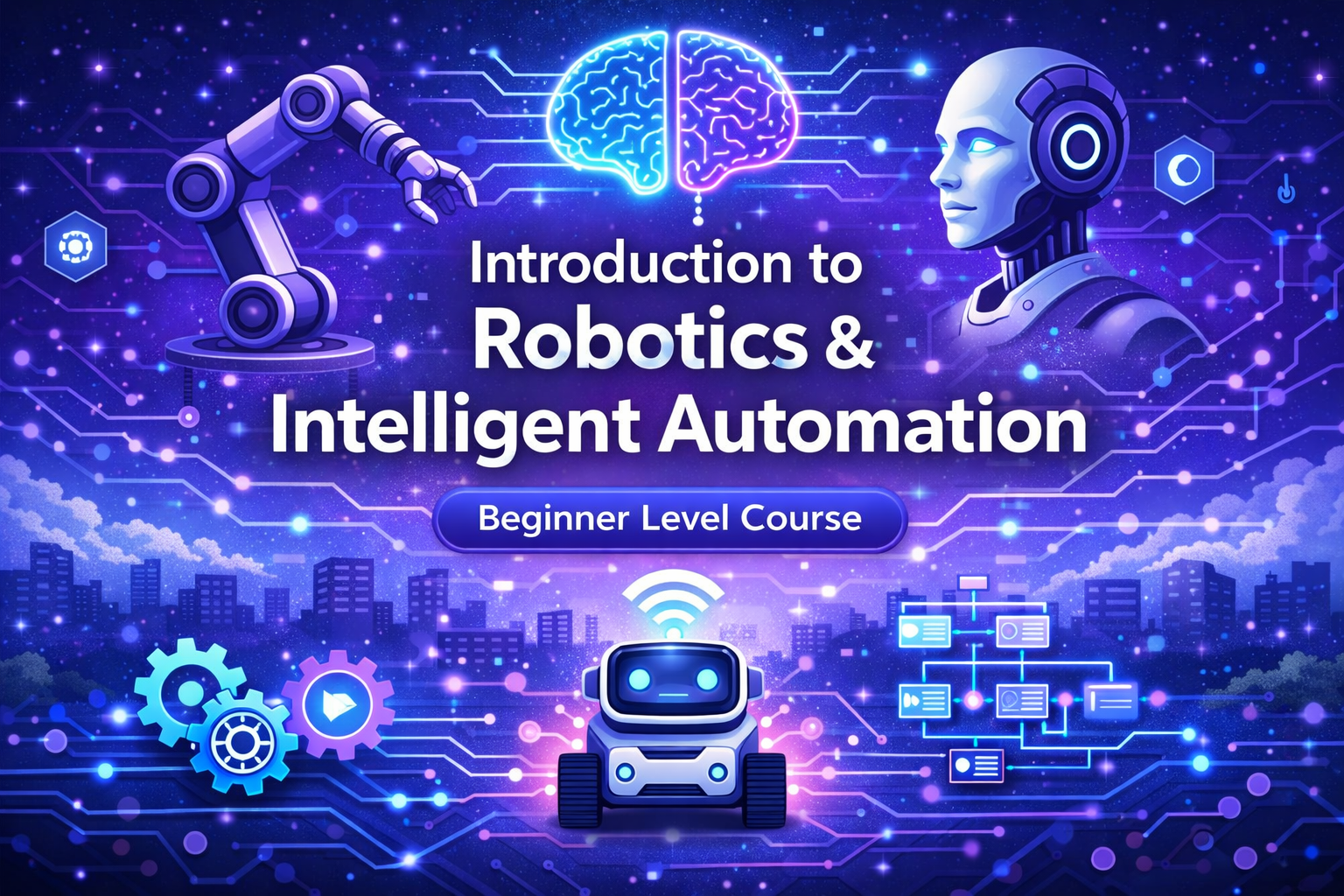
This course also prepares you for advanced topics such as Robotic Process Automation (RPA), Intelligent Process Automation, and Industrial Robotics.

 Foundation Courses